Join us for Open House on April 18th (RSVP Here)

Join us for Open House on April 18th (RSVP Here)
The ancient science of Ayurveda is a comprehensive path to aligning the individual with their deepest constitutional blueprint. At the core of its diagnostic tradition lies a practice of refined perception: nadi pariksha, or Ayurvedic pulse assessment.
Nadi means channel or river, and pariksha means to test or examine. This is not simply about counting the beats of the heart; it is a clinical and contemplative art where the pulse is treated as the primary channel of communication—the “river of life” that carries the complete vibrational signature of the individual’s physical, mental, and spiritual ecology.
The fundamental framework of Ayurvedic medicine rests upon the understanding of the three doshas: vata, pitta, and kapha. These three biological energetics govern all psycho-physiological functions—from movement and metabolism to structure and immunity. The pulse serves as a dynamic meter reflecting the balance or current disturbance, called vikruti, of these three energies.
The complex sophistication of pulse analysis lies in its ability to simultaneously perceive the energetic imprint of these doshas through the radial artery.
The examination is traditionally conducted on the radial artery of the wrist. The practitioner approaches this assessment with focused attention and a grounded presence (sparshan—the act of touch), often after the patient has rested for a brief period to ensure the pulse is not influenced by recent exertion or strong emotion.
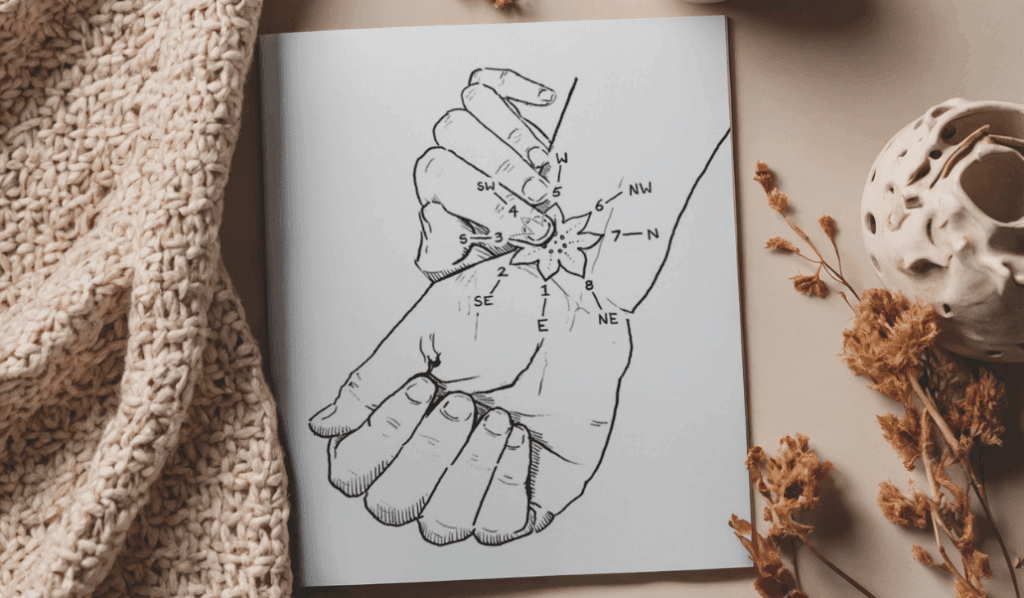
The practitioner places three fingers—the index, middle, and ring fingers—gently along the artery, aligned in a specific order to correspond with the flow of the doshas:
Classical texts note a difference in assessment location: the pulse is traditionally read on the right wrist for men and the left wrist for women, as this aligns with the unique flow of nadis (energy channels) relative to biological sex. But you can also use both hands on both wrists to gain even deeper insight.
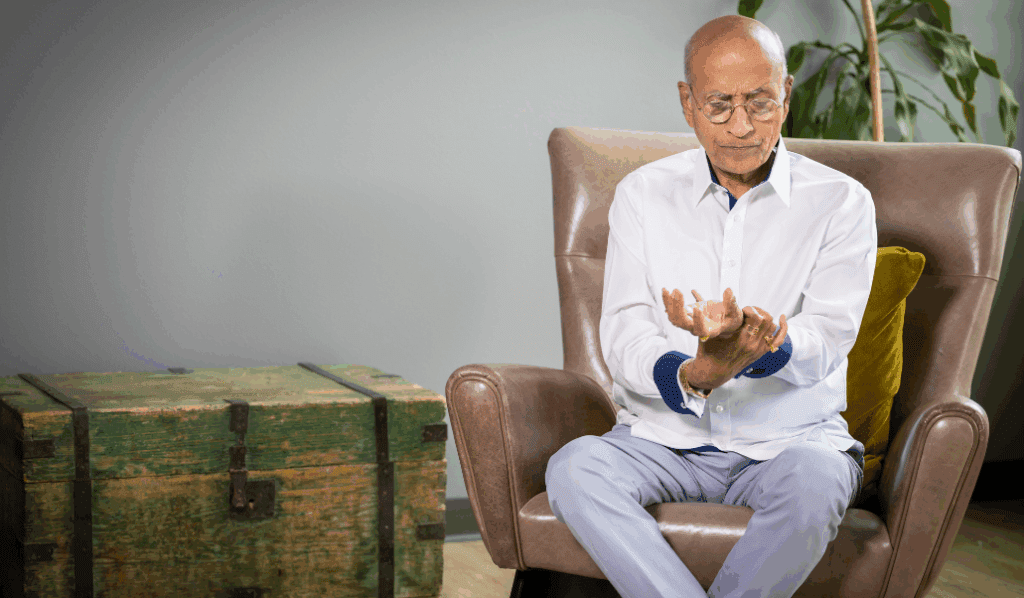
One of the most critical applications of pulse reading is the ability to differentiate an individual’s timeless nature from their current and temporary imbalance. This distinction guides the practitioner toward an appropriate, individualized healing strategy.
Ayurveda’s efficacy lies in treating the vikruti (the current imbalance) while honoring and supporting the prakruti (the unique person), ensuring that treatment is fundamentally an act of realigning with one’s inner nature.
The life force flowing beneath the fingertips is not a single sensation; it presents in three primary energetic movements (gatis), which are described using classical analogies that capture their specific energetic signature:
The vata pulse is often compared to the quick, irregular, and serpentine movement (sarpa gati) of a snake. This reflects the essential qualities of the air and space elements—mobility, lightness, and speed. A pulse rate typically ranging between 80 to 95 beats per minute (BPM) often accompanies a dominant vata pulse.
| Quality | Description |
|---|---|
|
Movement |
Erratic, quick, wandering, and skipping.Content |
|
Feel |
Fine, thin, thread-like, and light under the finger. |
|
Rhythm |
Irregular or oscillating. |
|
Significance |
Indicates activation of the nervous system, stress, anxiety, or challenges with assimilation and elimination. |
The pitta pulse is likened to the strong, intense bounding of a frog (manduka gati). This corresponds to the nature of fire and water—sharp, transformative, and active. The normal range for a pitta pulse is 70 to 80 BPM.
| Quality | Description |
|---|---|
|
Movement |
Energetic, forceful, and distinct, with a high amplitude. |
|
Feel |
Medium density; seems to jump or leap with strong impact and is typically warm to the touch. |
|
Rhythm |
Relatively regular but can feel sharp or tense. |
|
Significance |
Reveals the state of the digestive fire (agni), inflammation, emotional irritability, or liver activity. |
The kapha pulse is perceived as the slow, measured, and graceful gliding of a swan (hamsa gati). This mirrors the nature of earth and water—stability, cohesion, and slowness. The kapha pulse is the slowest, typically ranging from 50 to 60 BPM.
| Quality | Description |
|---|---|
|
Movement |
Heavy, deep, slow, and wavy, resembling a ripple. |
|
Feel |
Broad, thick, and dense; requires considerable pressure to stop and is generally cool to the touch. |
|
Rhythm |
Slow and steady. |
|
Significance |
Points to the structural and immune integrity (ojas), accumulation, congestion, or emotional attachment. |
The assessment does not end with the doshas. The radial artery acts as a micro-map of the entire physiology, allowing the practitioner to detect the energetic status of deeper tissues and vital forces. In total, Dr Lad teaches us about 7 layers of the pulse, each providing insight to a unique part of our psycho-physiological being.
A dedicated practitioner learns to “listen” into deeper realms, where the energetic health of the body’s seven tissue systems (dhatus) is revealed. By consciously tuning in, the pulse can offer a snapshot of the vitality within the plasma, blood, muscle, fat, bone, nerve, and reproductive systems.
At the most refined level, the pulse reflects the state of the three vital essences:
If the agni (digestive fire) is low, unprocessed food forms ama (toxicity). This ama travels with the chyle to the deeper cellular level, altering the function of tejas and disturbing cellular intelligence. The pulse, in this case, may carry the thick, sticky impression of ama, which is a key precursor to systemic imbalance.
Since the mind (manas) and the physical body are inextricably connected, the pulse also serves as a register of the individual’s mental state, reflecting the three universal qualities (mahāgunas) that govern consciousness:
Pulse assessment elevates diagnosis to an act of compassionate presence. It requires the practitioner to cultivate an inner silence to perceive the body’s authentic signals without projection or prejudice. This requires that the practitioner have their own practice to cultivate silence and stillness of the mind. This unique connection underscores a core Ayurvedic principle: that true health is achieved not through external fixes, but through the deep, intimate knowledge of one’s self.
The path to embodying Ayurvedic wisdom begins with understanding the constant dialogue between the self and the environment. By learning to sense your rhythms, you empower yourself to make resonant choices regarding diet, lifestyle, and practice. Ayurveda is not a quick solution; it is a timeless path of gradual, embodied understanding that leads to lasting well-being.
The Art of the Pulse: A Masterclass in Nadi Pariksha
Learn the foundational concepts and practical skills for discerning the rhythms of life force directly from the tradition. This course is an invitation from a trusted friend to deepen your understanding of Ayurvedic medicine.
Join our Pulse Masterclass. Learn the Art of the Pulse and begin to perceive the inner nature of health.
For over four decades, The Ayurvedic Institute (TAI) has served as a premier center for Ayurvedic education, teaching this classical art with clarity and compassion. This timeless wisdom was skillfully brought to the West by Dr. Vasant Lad, founder of The Ayurvedic Institute. A living master and teacher, Dr. Lad’s devotion and clinical expertise have guided the establishment of authentic Ayurvedic practice in the contemporary world, ensuring this essential diagnostic tool remains accessible and grounded in traditional knowledge. His teachings, rooted in lived tradition, provide the foundational understanding necessary to witness the pulse not as a mechanical event, but as a living manuscript of health.
Join The Art of the Pulse: A Masterclass in Nadi Pariksha!
Learn the foundational concepts and practical skills for discerning the rhythms of life force directly from the tradition. This course is an invitation from a trusted friend to deepen your understanding of Ayurvedic medicine.